


Wet Effect Treatment of Porcelain Tiles in Porto
26 September 2023
In the picturesque city of Porto, Portugal, the art of craftsmanship reaches extraordinary levels thanks to Jorge Almeida’s company. This September, we want to share with you an exceptional work that celebrates craftsmanship perfection and sustainable innovation. Jorge Almeida’s company has ushered in a new era in the treatment of Portuguese handcrafted cotto tiles, carrying out a wet effect treatment that stands out for its eco-friendliness and lack of unpleasant odors.
The Beauty of Porto
Porto is famous for its quaint old town, which has been declared a World Heritage Site by UNESCO. Here you can admire the charming cobbled streets, the colorful facades of the buildings and the traditional restaurants that serve the famous Port wine.
In addition to its architectural heritage, Porto is also renowned for its beautiful bridges that cross the Douro River. The Dom Luís I Bridge, designed by Gustave Eiffel (famous for the Eiffel Tower in Paris), offers a breathtaking panoramic view of the city.
Visitors to Porto cannot miss the opportunity to explore the many wineries in the region. Here you can discover the process of producing Port wine and taste some of the best wines of the area.
Finally, Porto also offers beautiful beaches along the Atlantic coast. The beaches of Matosinhos and Foz do Douro are ideal for relaxing in the sun or taking a walk along the coast.

What is cotto
Cotto is a very ancient and versatile building material, also known as “terracotta” or simply “brick”. It is a type of tile made by firing clay in high temperature ovens. The firing process gives the cotto a remarkable hardness, resistance and durability, making it ideal for a wide range of applications and building uses.
One of the most distinctive features of cotto is its red or terracotta color, which derives from the presence of iron minerals in clay. This natural color is often appreciated for its warm and cozy aesthetic, and is used to cover walls, floors and roofs.
In addition to its beauty and resistance, cotto is also an environmentally friendly material, as is made from natural raw materials and can be recycled. It is known for its ability to maintain a constant temperature inside buildings, contributing to thermal and energy insulation. In addition, cotto is often used in restoration and conservation projects, as it allows to preserve the original appearance of historic buildings.
This type of flooring is very popular in Portugal and is used both indoors and outdoors. Thanks to its weather resistance, Portuguese cotto is ideal for use in external environments such as patios, terraces and gardens.
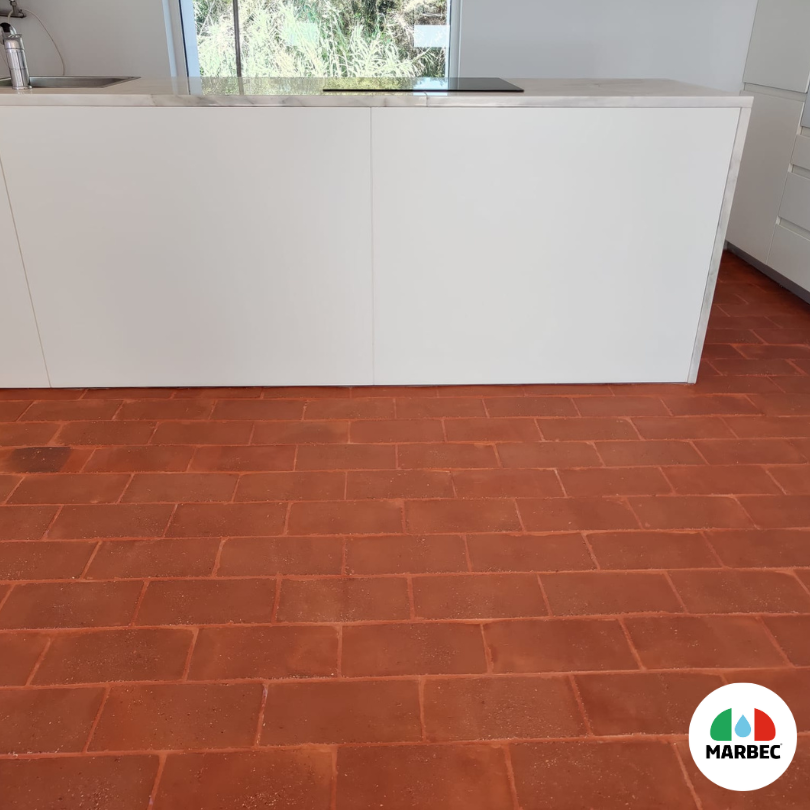
The Wet Effect Treatment: Sustainable Innovation
The wet effect cotto is a particular finish that is applied to the cotto floor to give it a shiny look similar to that of the just poured water. This treatment is used to enhance the natural beauty of the material, creating an elegant and modern aesthetic effect.
The wet effect treatment used by Jorge Almeida is carried out exclusively using water products, thus avoiding the use of dangerous solvents and the unpleasant smell often associated with similar work.The undisputed protagonist of this treatment is TON PLUS, a water-based product that is able to tone the cotto materials in a similar way to traditional oil-solvent-based impregnations, but with a much lower environmental impact.
How to treat spoiled cotto
Let’s see then what were the products to clean the Portuguese internal cotto.
The intervention began with a descaling cleaning phase.
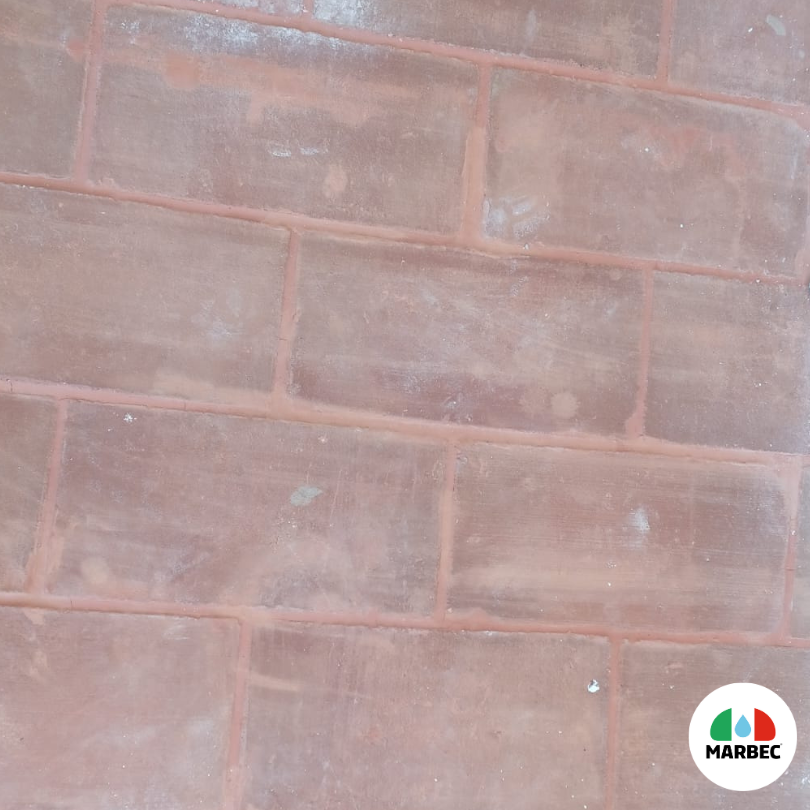
To remove incrustations, cement grouts, paints and dirt from the surface of the cotto, a single brush is used with a brown disc together with the descaling product VIACEM, a strong buffered acid detergent specific for removing cement grouts, efflorescence and limestone encrustations on cotto and terracotta.
This step is essential to prepare the surface and ensure the adhesion of the subsequent treatment.
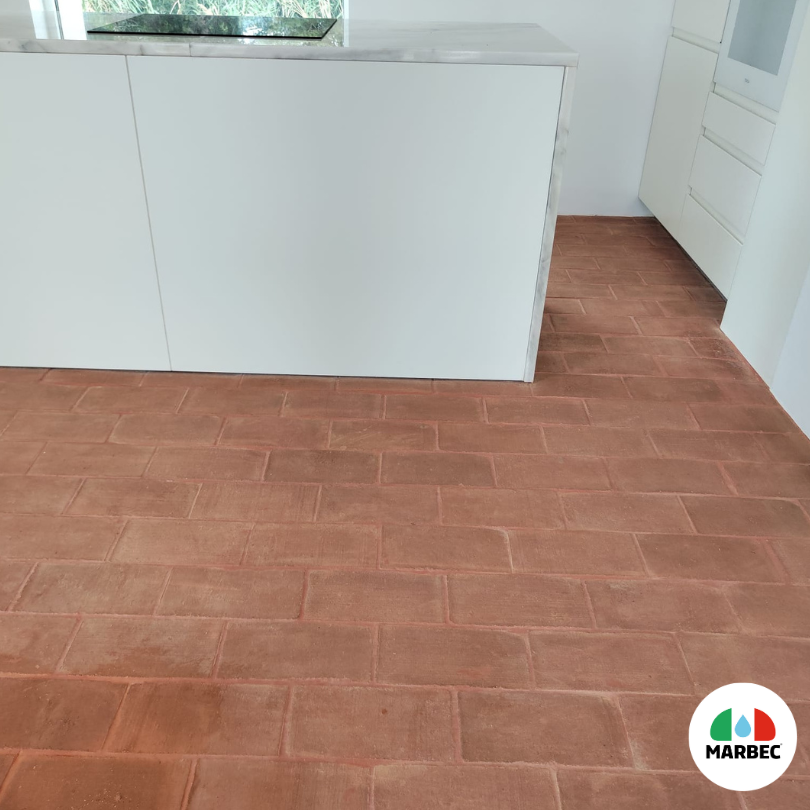
The heart of the process is the application of TON PLUS, an odourless water product that gives the wet effect to the cotto. This protective hydro-oleophobic product specific for stone materials with high absorption (cotto, stones, terrazzo…) offers a lasting protection against rising humidity and serves to remove stains on cotto, giving the material a luxurious and bright aspect.

After the application of two coats of TON PLUS and the drying, two more coats of the anti-wear and anti-dirt finishing IDROFIN MATT are applied, which protects over time the base treatment of the material and its initial aesthetic characteristics, as specified in the data sheet.
The art of craftsmanship in Porto, masterfully represented by Jorge Almeida and his company, shows us that tradition and innovation can coexist. The wet effect treatment, made with eco-friendly Marbec water-based products, represents a step forward in environmental sustainability without compromising the beauty and durability of Portuguese artisanal cotto. Thanks to professionals like Jorge Almeida, Porto continues to be a beacon of art and innovation in the world of craftsmanship.
-

BROWN DISC MARBEC | Very Abrasive
The BROWN DISC is composed of a polyester structure with a high density of resin and mineral. It has high resistance to acid or alkaline substances, it is used wet to carry out manual dewaxing and descaling washes. Ideal for: Descaling cleaning on cotto and porcelain tiles; Dewaxing cleaning on cotto, stone and cement.
+ Varianti14.68€
-
IDROFIN MATT
Specific matt finishing wax for completing the treatments of cotto, stone, and terrazzo placed inside. Over time it protects the basic treatment of the material and its initial aesthetic characteristics.
+ Varianti22.40€


Cleaning and restoring indoor varnished wood floors makes it possible to revive matte or glossy varnished parquet flooring that has lost its shine, even colour and original appearance due to everyday wear. When the protective finish is still intact and the floor does not require complete sanding, you can restore parquet without sanding by following a dedicated treatment that removes surface greying, revives the wood and restores the protective finish. This restoration process is suitable for both glossy and matte varnished parquet floors by selecting the treatment that matches the original finish. For this reason, Marbec developed the KIT RESTAURA LEGNO VERNICIATO LUCIDO and the KIT RESTAURA LEGNO VERNICIATO OPACO, two complete systems designed to clean, restore and protect varnished wood floors without sanding or refinishing whenever the floor is still suitable for surface restoration.

An oak parquet floor with an oil-wax impregnation can lose colour, protection, and visual uniformity over time. This often happens because of incorrect maintenance or unsuitable products. However, if the wood is still structurally sound, replacement is not always necessary. With a professional restoration process, the surface can regain balance, beauty, and long-term protection.


