


This month with our column we want to show you the extraordinary result obtained in the restoration of a facade in marble and sandstone, affected by the sulfation process.
For this desulphurizing cleaning work, the product used was DESOLF4, able to give a second life to the surface. Before examining the use of this specific stain remover, let’s try to understand what generally damages marble and what exactly is the sulfation process of marble.
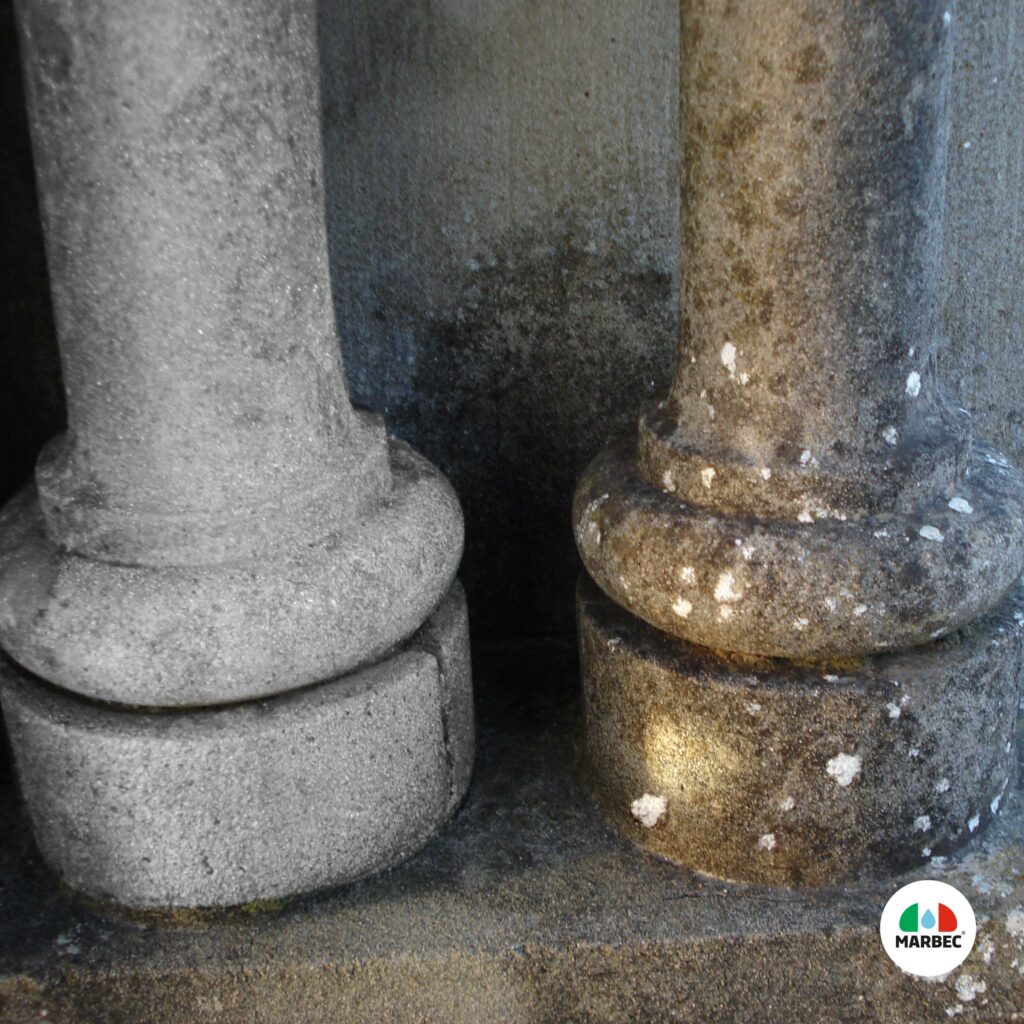
What ruins the marble?
Marble is a type of metamorphic rock that is formed by the alteration of limestone or dolomite by heat, pressure, or chemical processes. It is composed primarily of calcite (a type of sodium carbonate) and is typically white or light in color, but can also be found in a variety of other shades, such as pink, gray, green, or black.
This material is appreciated for its beauty and durability and is commonly used in the construction of sculptures and in the field of decorative arts. It is also used as a material for floors, work surfaces, and for the realization of shelves in fireplaces.
Marble is a very porous material and can be spoiled by several factors, including:
- acids, such as lemon juice or vinegar, which can affect its surface, causing opaque stains and scratches;
- alkaline, such as drain or oven cleaner, which can damage the marble surface;
- abrasive or sponge cleaning products that can scratch or dull the marble surface;
- the sealing (or non-sealing) of marble that can lead to the formation of stains or discoloration of the marble itself;
- exposure of this material to extreme temperatures which may cause discoloration or cracking;
- constant humidity or exposure to water that may cause mold or fungus;
- the intense trampling or falling objects that can scratch or chip the surface.
What is sulfation and how to intervene
Sulfation is a process in which sulfuric acid reacts with a material, causing the formation of sulfur compounds. In the context of marble, sulfation refers to a chemical reaction that occurs when sulfur compounds in the air or other materials come into contact with marble.
Sulfur compounds can be found in a variety of sources, such as industrial pollution, automobile exhaust gases, and even in household products such as cleaning products or matches. When these sulfur compounds come into contact with marble they can make it discolor and damage it.
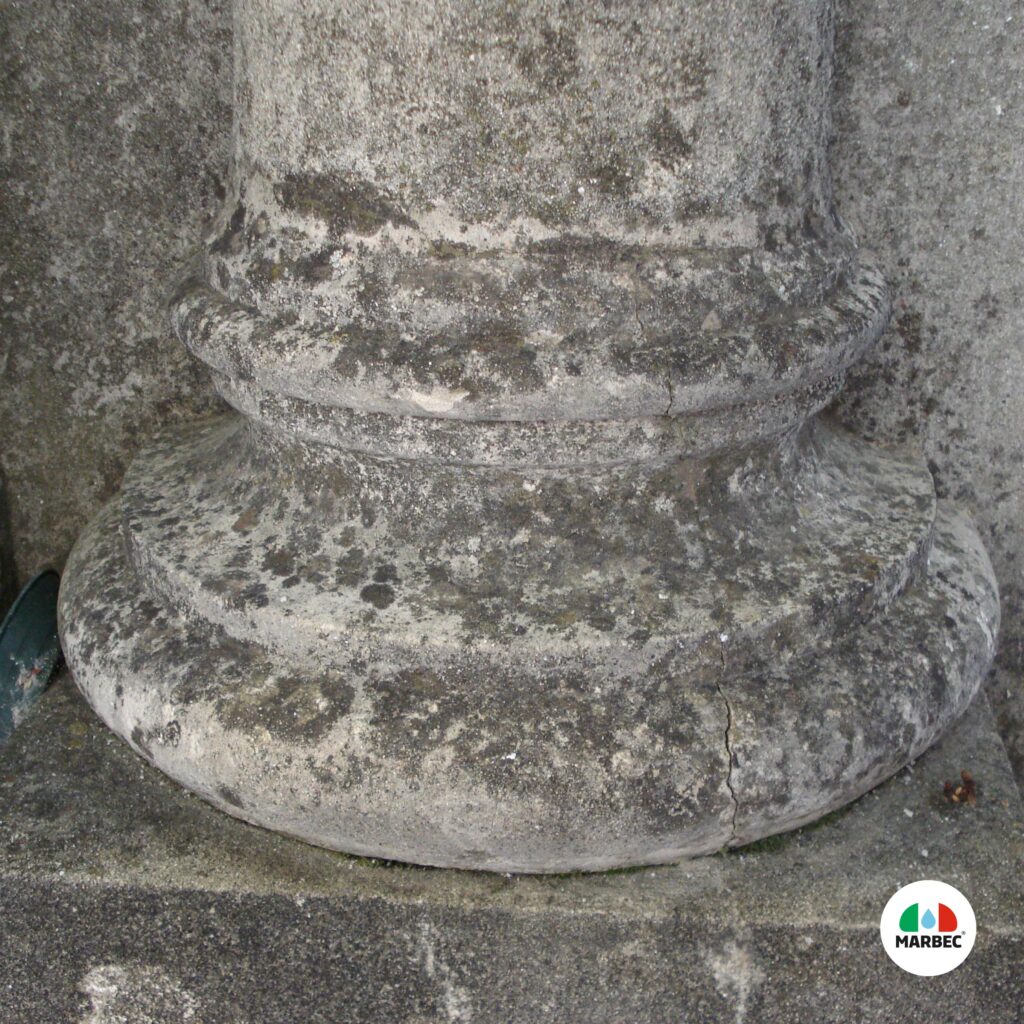
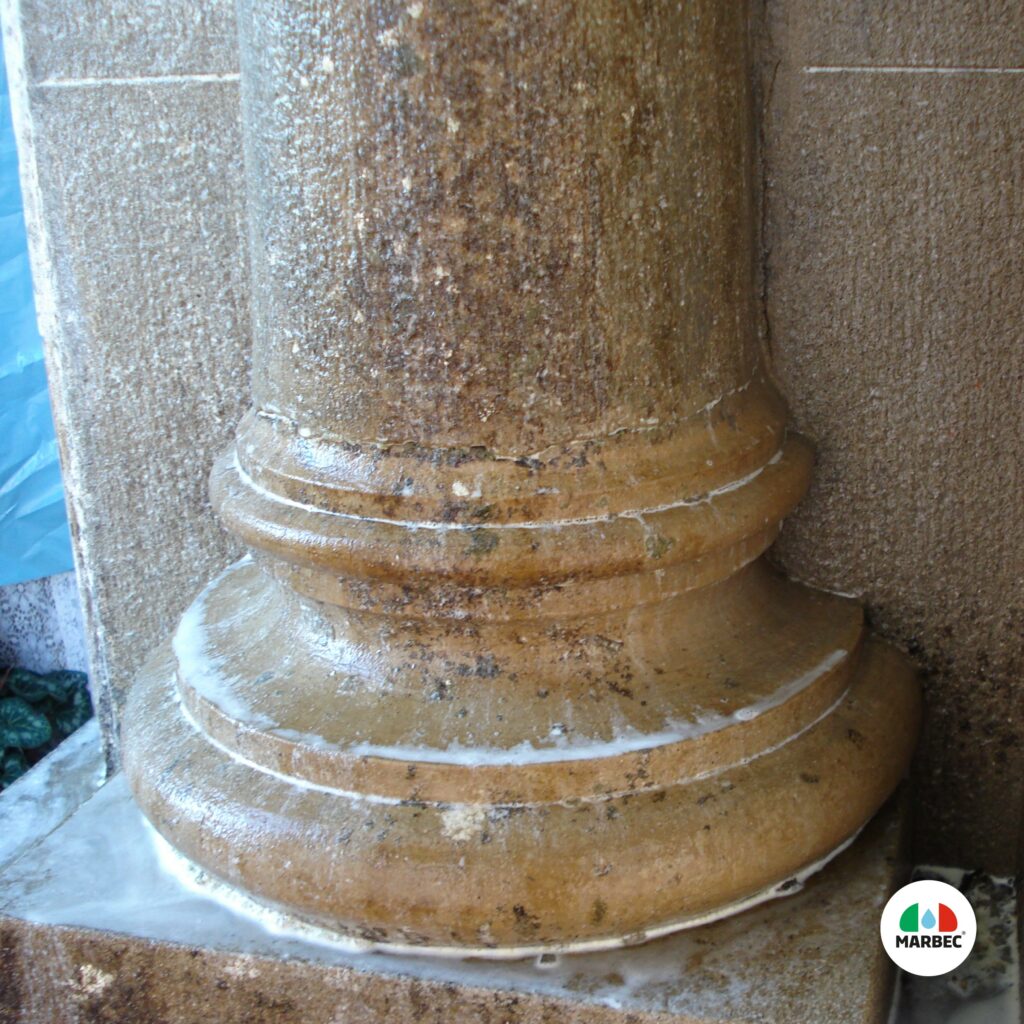
Sulfation can also lead to the formation of acid rain that can erode marble surfaces. Sulfation damage can be prevented by keeping surfaces clean and dry, protecting them from sources of sulfur compounds.
To combat the sulfation on the facade in marble and sandstone the product used was, therefore, DESOLF4, a powder stain remover for stone materials able to remove stains and dark crusts caused by persistent rising humidity and oxidation of copper alloys.
For its use, DESOLF4 was diluted with water and mixed until a paste was formed, and applied on the surface with a spatula in the affected area. After a wait of about twelve hours, it was then removed dry with a nylon brush, before rinsing with plenty of water.
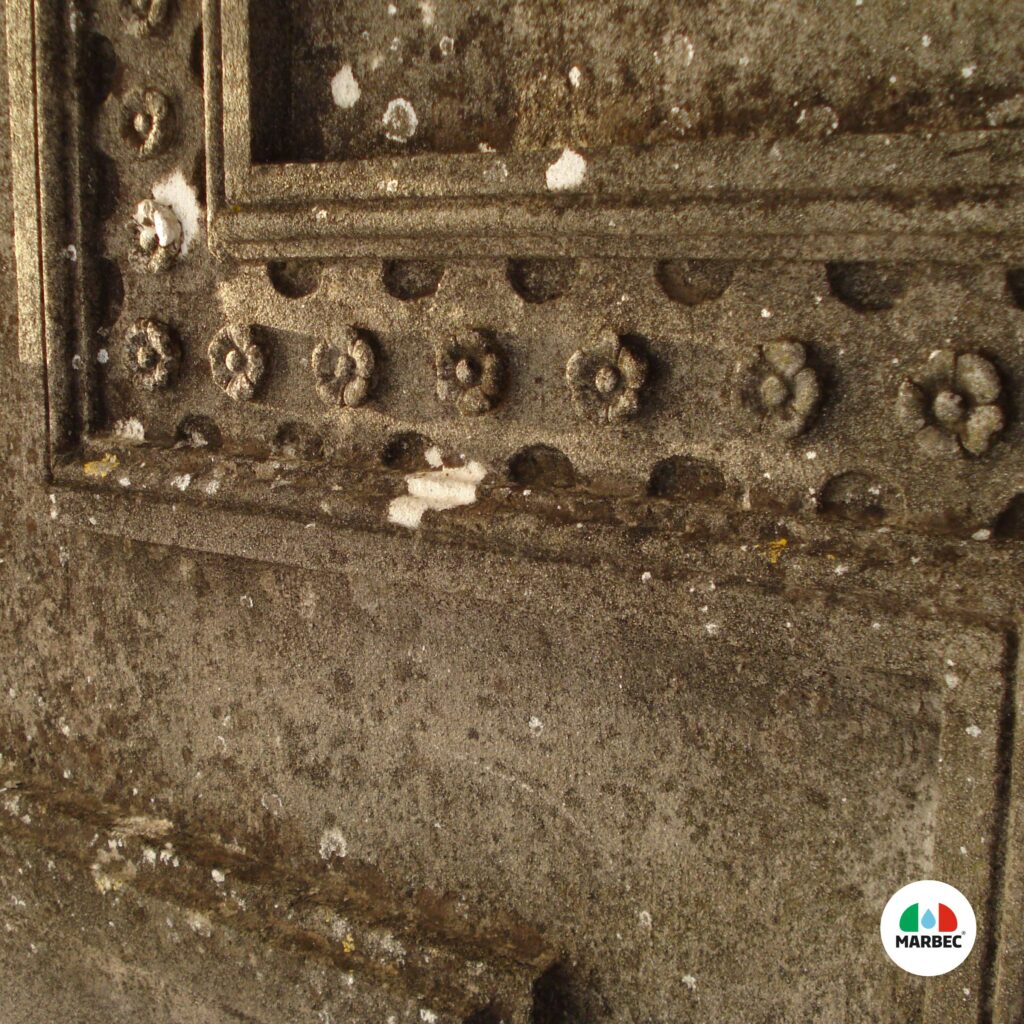
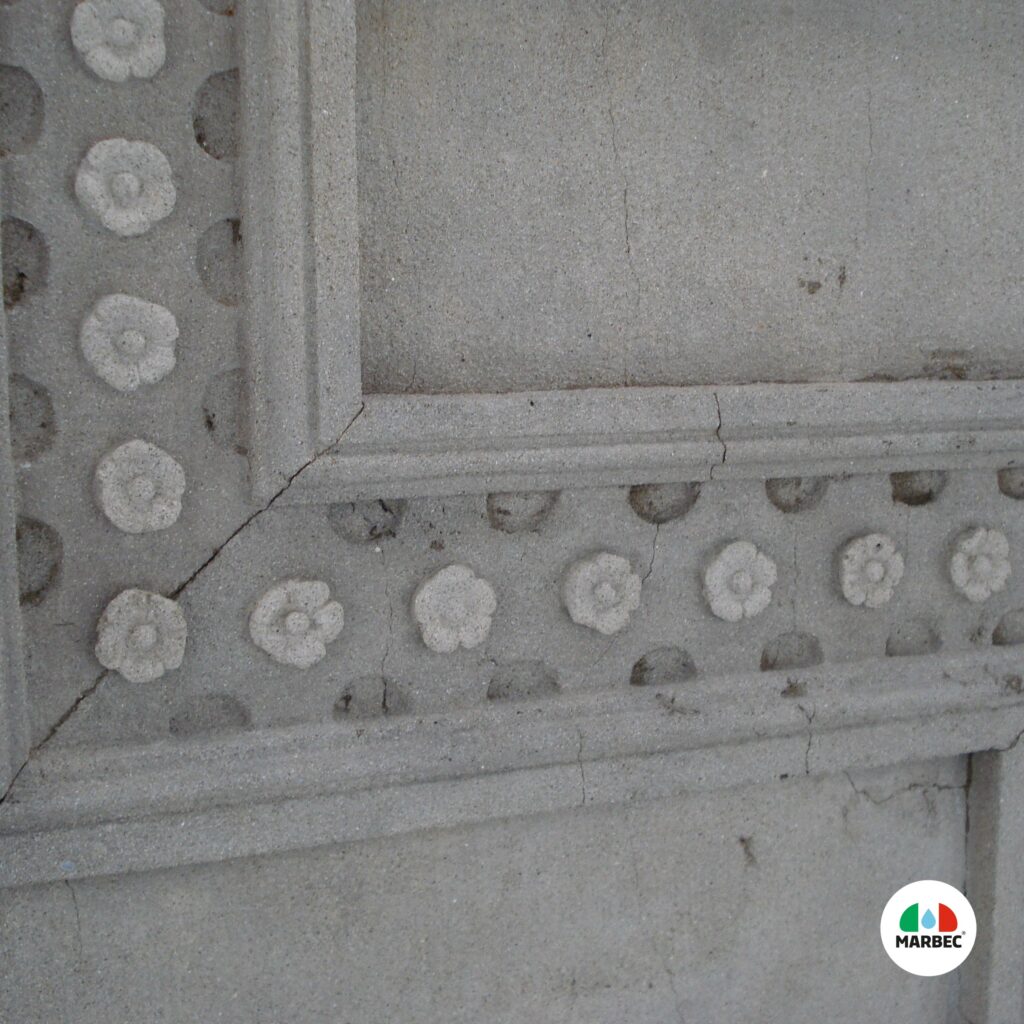
Thanks to its specific desulfating action, DESOLF4 is ideal for application on delicate stone or in any case on poor mechanical strength surfaces, to the point of being perfect for the restoration of this facade in marble and sandstone.

Sodium percarbonate is a water-soluble powder widely used to remove stains, whiten laundry, and support hygienic cleaning on fabrics and washable household surfaces. When dissolved in water, it releases oxygen. This reaction helps break down stains and organic residues in a simple and effective way. If you often deal with yellowed white clothes, stains that remain even after washing, bins that keep unpleasant smells, shower curtains with marks, or surfaces dulled by residues and streaks, you are probably looking for exactly this kind of solution. However, sodium percarbonate is not designed for heavy degreasing. If you need to remove thick grease layers or stubborn encrustations, a dedicated degreasing detergent will work better.

Hand washing dishes is part of everyday home life. Whether you clean up after a quick lunch or a family dinner, the product you use makes a real difference. However, many people choose a dish detergent out of habit, without considering the practical differences between a concentrated dish soap and a traditional dishwashing liquid. A concentrated formula can offer clear advantages in terms of performance, yield, and dosing control. Therefore, it is useful to understand what truly changes between these two options and when a concentrated solution is the smarter choice for daily dishwashing.


