


Best job of the month: cotto recovery of the residence of a small village in Lazio
5 August 2021
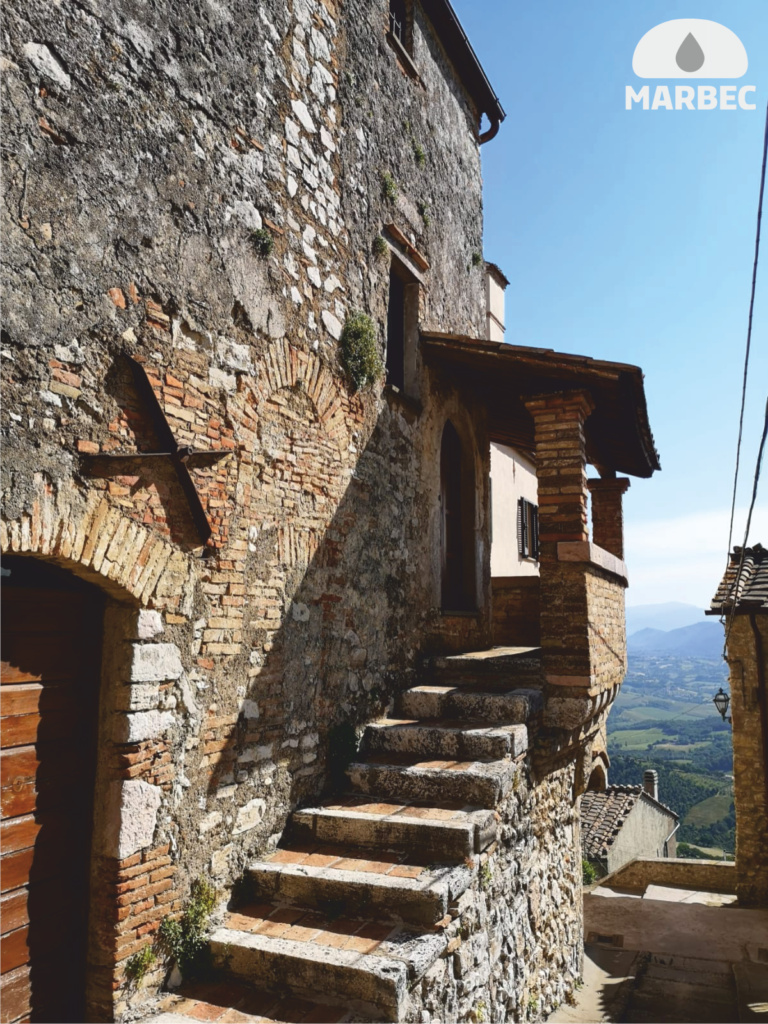
With the best job of the month this time we move to Lazio, inside a charming house of a small village.
One of the characteristics of our national territory, envied and admired all over the world, is the presence of small villages of medieval origin, real open-air museums from which it is impossible not to be fascinated.
Present throughout Italy, the villages also represent a heritage of the region of our capital, Lazio, and their list is long.
Once again this work, carried out by the Punto Service team, allows us to take another journey through time, an opportunity to discover or rediscover the origins of the villages, symbolic places of our Italian nature.
The professionals have worked on the recovery of the cotto of a house located in a village in Lazio. Before seeing the procedure and the products used, let’s take a journey into the past, discovering the origins of these wonderful places.
The history of the villages
The term “village” was already present in the late Latin period and in the fourth century the Roman writer Vegezio used it in his military art manual. The origin of the word, according to current studies, would be of Greek derivation (with the meaning of “tower” or “fortress”), although a Germanic one is assumed (with the meaning of “fortified city”, “castle” ).
Whatever the precise origin of the term is, however, it is established that it is connected to the concept of protection and the village differs from the hamlets, towns and villages, in particular due to the presence of fortifications.
Whether they are perched in the mountains or stretched out along green valleys, the villages are unique places where it is wonderful to get lost and from Trentino Alto-Adige to Sicily each region has its own.
Lazio is rich in fascinating villages ranging from that of Bomarzo, in the province of Viterbo, to that of Sermoneta (Latina), passing through Calcata, Caprarola, Castel di Tora, Civita di Bagnoregio and Nemi.
Places that still smell of the history that has passed through them and that, without words, make us travel through time. Places whose surfaces are trampled every year by thousands, millions, of tourists, curious but also ordinary citizens, and which testify to a distant past.
Spending your time inside Italian villages, as well as peeking inside its homes, means rewinding the time machine.
The intervention of Punto Service: cotto recovery
The Punto Service team, a company with a wide range of services and specialized in cotto, worked on the recovery of the flooring of a house in a small village in Lazio.
For the cotto recovery of this residence, the Punto Service team carried out the following operations:
Firstly, they cleaned the surface with SGRISER, an alkaline descaler that is used to remove the grease and oil patinas.
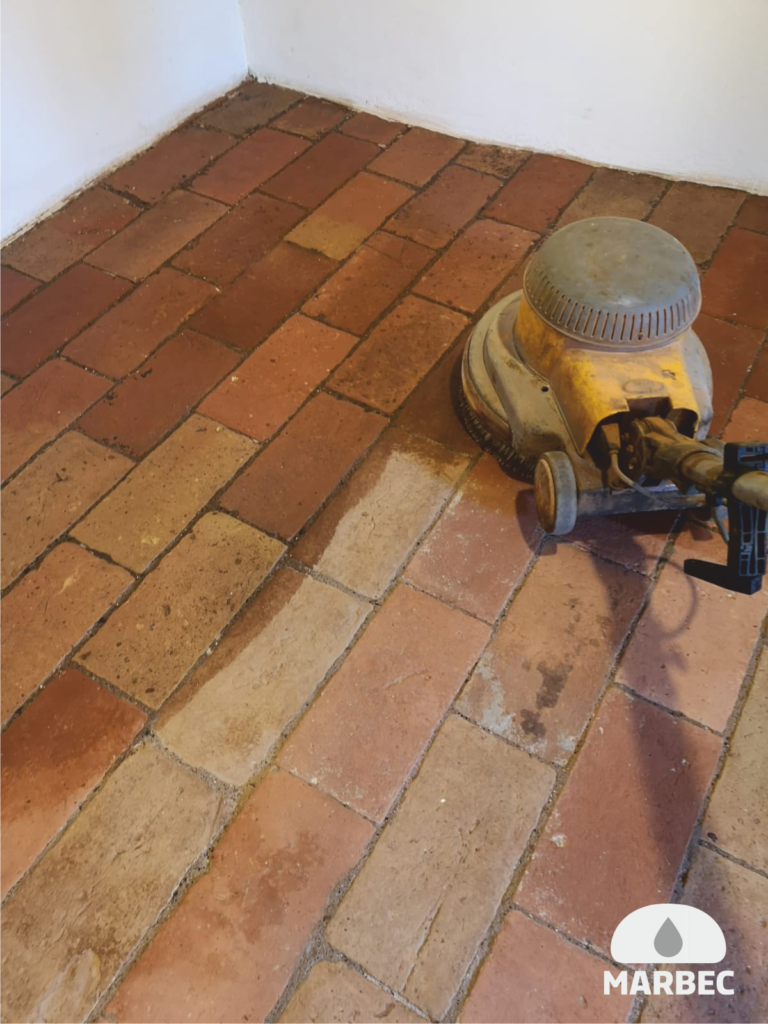
This was followed by the use of the VIACEM descaling acid which neutralizes SGRISER.
Then, using a single disc machine equipped with a TYNEX BRISTLE DISC (specific for de-waxing, degreasing and descaling handmade antique cotto), the professional team of Punto Service prepared the surface for the treatment.
For the treatment, the products used are TIM and PRIMAMANO NEUTRA. The first, sprayed on the cotto and uniformed with the FLEECE WAX SPREADER, reduces the absorption of the material; the second instead serves to level the absorption of the surface, preparing it for the application of ROYAL WAX paste wax.
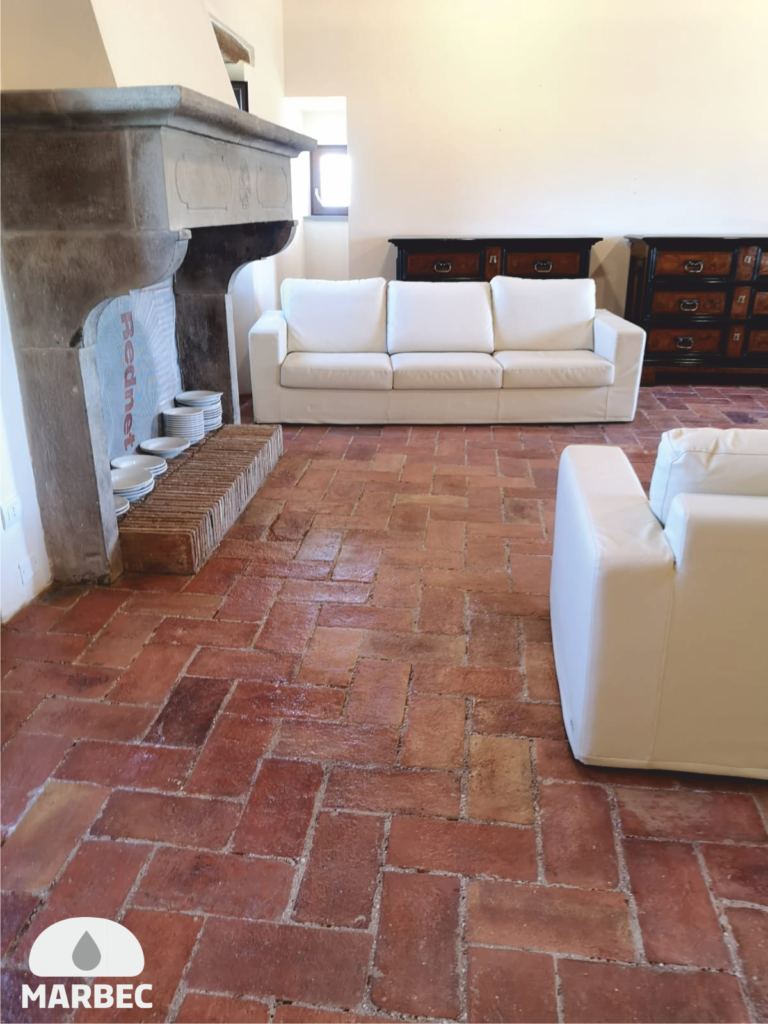
At this point, the team applied ROYAL WAX, a specific product for handmade cotto, with a single disc machine equipped with a TAMPICO DISC, and finished the recovery operation with IDROFIN MATT which serves to protect the basic treatment, making the surface easier to clean and maintain.
Now finally the cotto surface of the house has returned to shine.
Ready to be a perfect stage again for all the lives that will walk on it.

Cleaning and restoring indoor varnished wood floors makes it possible to revive matte or glossy varnished parquet flooring that has lost its shine, even colour and original appearance due to everyday wear. When the protective finish is still intact and the floor does not require complete sanding, you can restore parquet without sanding by following a dedicated treatment that removes surface greying, revives the wood and restores the protective finish. This restoration process is suitable for both glossy and matte varnished parquet floors by selecting the treatment that matches the original finish. For this reason, Marbec developed the KIT RESTAURA LEGNO VERNICIATO LUCIDO and the KIT RESTAURA LEGNO VERNICIATO OPACO, two complete systems designed to clean, restore and protect varnished wood floors without sanding or refinishing whenever the floor is still suitable for surface restoration.

An oak parquet floor with an oil-wax impregnation can lose colour, protection, and visual uniformity over time. This often happens because of incorrect maintenance or unsuitable products. However, if the wood is still structurally sound, replacement is not always necessary. With a professional restoration process, the surface can regain balance, beauty, and long-term protection.


