


We do not often think about it, but carpets are one of the places in the house where you collect more dust, dirt, allergens and bacteria, negatively affecting the air quality and well-being of those who live there. Keeping carpets clean, therefore, is crucial not only for an aesthetic issue, but also to ensure a healthy and welcoming environment. Proper maintenance of the carpets helps to preserve their beauty, color and texture, prolonging their useful life and maintaining their appearance as new. However, there are many common challenges to cleaning carpets: from removing stubborn stains, such as those caused by food, drinks or pets, and maintaining the vividness of the colors and softness of the fibers. Addressing these issues requires the use of appropriate techniques and products, as well as regular maintenance to prevent the accumulation of dirt and irreparable damage to the carpets. So how to remove stain carpets? In this article we will see how to remove the most common stains from the carpet.

How to remove stains: the most used methods of removing stains from carpets
Staining a carpet may seem like a daunting task, but with the right methods and products you can keep the carpets in excellent condition and stain-free. There are various approaches to cleaning carpets, each with its own specific advantages. Below, an overview of the different methods and products generally used:
- Regular extraction: is the basic method of keeping carpets clean. Removes dust, dirt and surface debris using vacuum cleaners or other appliances.
- Steam cleaning: high temperature steam dissolves dirt and sanitizes the carpets in depth, eliminating stains and other residues.
- Home methods: Sometimes the substances we commonly find in homes can provide immediate solutions for staining carpets. For example, it is very common to clean carpets with a solution of ammonia and water, which is buffered on the carpet surface and then removed with a cloth soaked in water. This is one of the most effective solutions against stubborn stains, but you should be careful not to exceed with ammonia. In addition to this, substances such as corn starch, flour, salt or bicarbonate are often used on carpets, which absorb the liquids poured on the carpet.
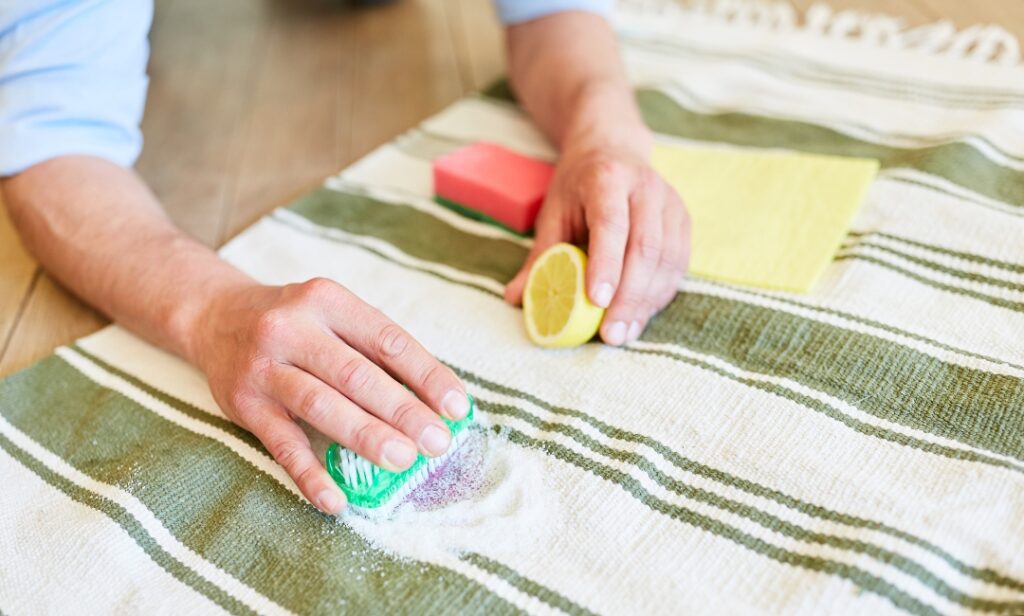
Remove stains from carpets: Coffee or red wine? Several remedies
It is common to pour food, drinks or other substances on carpets, carpets and upholstery. Whether it is coffee or dirt left by the paws of pets, it is essential to act quickly, before the substances penetrate the fibers of the fabric and dry out. In this case it will be much more difficult to remove stains from carpets. As we have already seen, there are many home remedies, specific for various types of stain. But in many cases these home remedies are not enough to stain carpets and wallpapers. If the home remedy does not work, there are various stain removers specific to each type of stain on the market. Let’s see what are the most common stains and how to solve them:
- For red wine: Blot immediately with a dry cloth, salt the carpet to absorb the liquid, leave for 15-20 minutes and then vacuum. If the wine stain persists, it is advisable to try with a specific stain remover.
- For coffee: Immediately dab with a dry cloth, spray a solution of white vinegar and water, dab again and rinse with clean water. Avoid rubbing to avoid spreading the stain.
- Oil or greasy food: To remove oil stains from carpets and upholstery, start by absorbing excess oil with a paper towel. Sprinkle the area with corn starch or baking soda, leave for 15-20 minutes, then vacuum. Clean the stain with a solution of dish soap and warm water, dabbing gently. Also in this case, if the stain does not disappear it is recommended to rely on specific detergents.
- For animal urine stains: Immediately dab the urine with a dry cloth, then apply a solution of white vinegar and water to neutralize the smell and disinfect. Dab with a clean cloth and rinse with water. Use a specific enzymatic detergent to remove any odor residues.

PULI TEX: The perfect ally to remove stains from a carpet

Are these household methods always enough to remove stains from the carpet? Obviously the methods listed above can be very useful for emergencies, but the use of specific products and techniques for carpets definitely offers more effective and lasting results, preserving the beauty and integrity of the carpets over time. That’s where PULI TEX comes in, a Marbec product with a delicate formula, ideal for removing stains quickly and thoroughly, ensuring a clean without halos and safe for fabrics.
Advantages of PULI TEX:
- Efficiency: Specific solutions like PULI TEX are formulated to effectively treat different types of stains and dirt, delivering superior results than home remedies that are often less powerful.
- Fibre protection: PULI TEX is designed to be safe on carpet fibers, reducing the risk of damage that can occur with the use of aggressive household substances such as vinegar or baking soda.
- Convenience: Using PULI TEX reduces the time and effort required to obtain clean and stain-free carpets.
- Hygiene: PULI TEX not only removes visible dirt, but also allergens and bacteria, contributing to a healthier home environment.
How is it used? Just spray the product on the surface to be cleaned, wait a few minutes, rub with a sponge or a soft cloth, dab the residue and rinse with a wet cloth. If you have a vacuum cleaner the cleaning will be even faster.

Ordinary and extraordinary maintenance of carpets
Let’s see some good practices to clean and keep our carpets and upholstery intact over time. The ordinary maintenance of the carpets is essential to keep them clean and in good condition.
- Vacuuming regularly: Vacuuming the carpet at least once a week helps remove dust and surface debris. In case of presence of animals, it is advisable to vacuum even more frequently.
- Treat stains immediately: Use specific stain removers such as PULI TEX can prevent permanent damage.
- Turning and tipping carpets: Doing so periodically helps to distribute wear evenly.
However, it is advisable to carry out an extraordinary professional cleaning at least once a year, or more frequently in case of very busy carpets or with stains difficult to remove. Professionals can use advanced techniques such as steam cleaning to remove deep dirt and sanitize carpets, ensuring complete cleaning and extending the life of the carpet.
-

SOFT MICROFIBER CLOTH | MARBEC
Ideal for washable tops such as glass, mirrors, plastic, stainless steel, chrome, ceramic and enamel surfaces. Particularly strong, tear-resistant edge. Can be used for all environments. Measures 40x40 cm.
2.79€


When you use your oven or barbecue regularly, burnt grease, carbon residue, soot and black crusts can quickly build up on internal surfaces. This type of dirt is not the same as everyday kitchen grime. Instead, it forms because of high temperatures, bonds strongly to the surface and becomes harder to remove over time. In these situations, generic cleaners and DIY solutions are often ineffective. Worse still, they may lead to overly aggressive scrubbing that damages surfaces. That is why it is important to understand how this dirt forms and how to treat it properly. With the right approach, cleaning becomes easier and surfaces stay in better condition for longer.

Cleaning metal pots and utensils correctly is a daily task for anyone who cooks at home and uses tools that come into contact with food, heat and water. Stainless steel with streaks, darkened copper, silver that loses its shine or dull brass are common issues. In most cases, these problems are not caused by dirt, but by using cleaning methods that are not suitable for the specific type of metal. In this article, you will find practical advice on how to clean cookware and kitchen tools made of copper, stainless steel, silver, brass and chrome-plated surfaces. You will also learn which DIY metal cleaning methods really work at home, how to use them correctly and when it is more effective to rely on specific metal cleaning and polishing products to achieve more even and long-lasting results.


