


Have you ever looked up at the ceiling or at the corners of the walls just to discover annoying grayish spots? If so, you should know that these stains could be a sign of a common household problem: mold. It is unsightly and can pose a health threat, but fortunately, there are effective solutions to remove mold from the wall.
In this article, we will explore how and why mold is formed and how to defeat it using the right products, such as PULI MUFFE, IDROWIP, and ACQUABLOCK.
What is mold and why it is important to eliminate it
Mold on the walls and in the house is a common problem that can have negative consequences for people’s health and well-being. Various types of mold can occur on walls, such as black or white mold, and it is often caused by high humidity or water infiltration into walls.
The presence of mold can lead to respiratory problems, allergies, skin and eye irritations. It is especially dangerous for people with pre-existing respiratory problems or with a compromised immune system. Therefore, it is vital to take immediate measures to remove it and prevent its reappearance.
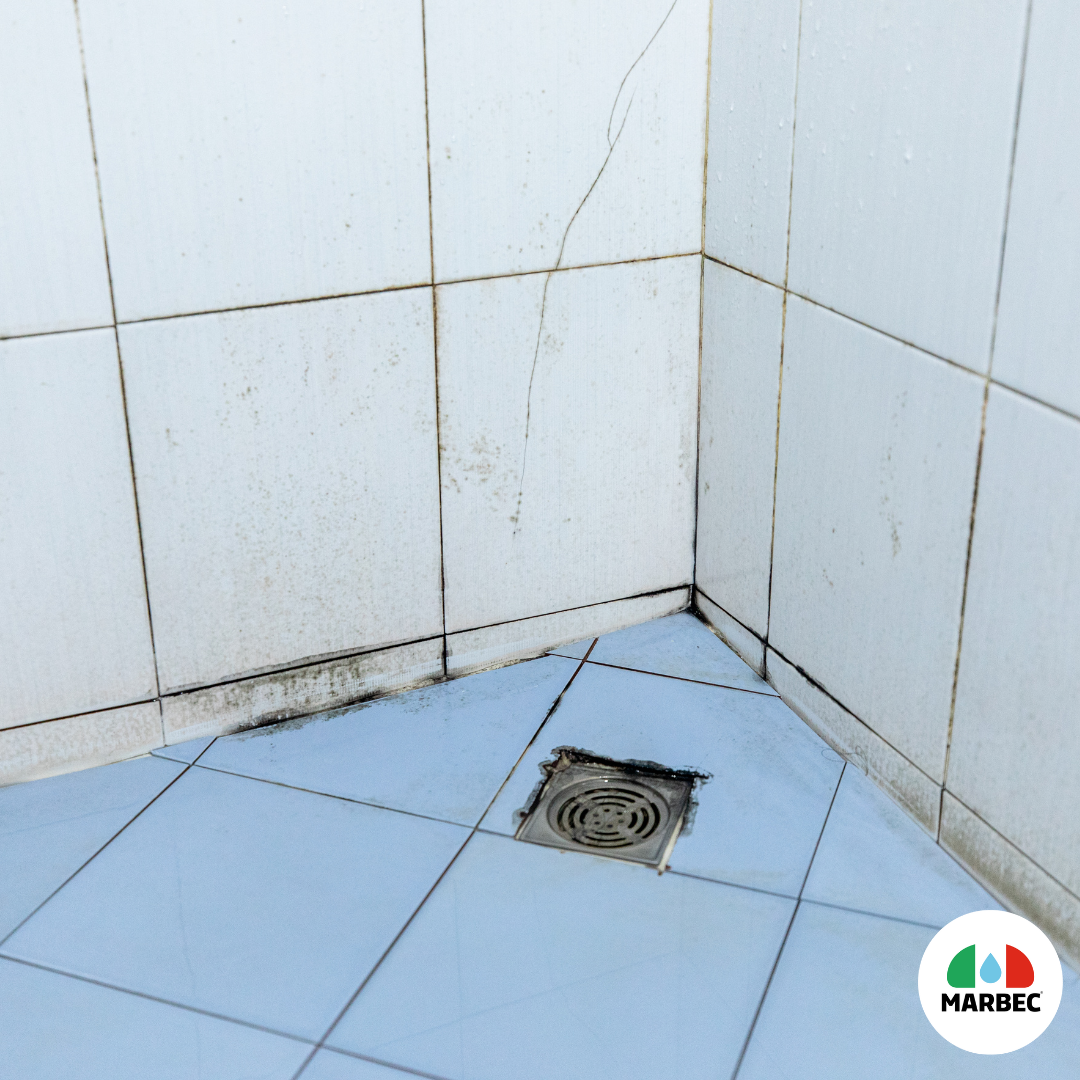
Read on to find out all you have to know about mold and how to protect yourself and your family from this annoying invader in your houses.
Causes of formation of mold
Mold develops in humid environments with poor ventilation. It forms when the mold spores in the air find a moist surface on which to take root and proliferate. Common causes of mold formation on walls include:
- Humidity: high humidity in the air can condense on the walls, providing mold spores with a favorable environment for growth;
- Water infiltration: if there are cracks or structural damage that allow water to penetrate into the walls, mold can develop rapidly;
- Lack of ventilation: poor air circulation within a room can encourage moisture accumulation and mold formation.

How to remove mold from walls naturally
If you’ve noticed mold on the walls of your house, it might be time to consider natural remedies to get rid of it.
One of the most effective ways to remove mold from the wall is to use white vinegar diluted with hot water. Just spray this solution on the affected area and let it act for a few minutes before rubbing the mold away with a brush.
Another natural remedy is the use of baking soda. You can make a paste by mixing baking soda with water until you get a consistency similar to toothpaste. Apply this paste to the mold and leave it on for a few hours before rinsing thoroughly.
In addition, it is important to improve the ventilation of your house by opening windows regularly and installing fans or, if necessary, dehumidifiers. Also be sure to solve any water infiltration problems or insufficient thermal insulation that may contribute to moisture and mold formation.

Best product to remove mold from walls
However, these remedies do not always solve mold problems, so let’s discover together some powerful solutions that will help you fight the mold problem in your home or work environment.
At Marbec, with our line of products specialized in mold removal, we have formulated an anti-mold treatment scheme to remove mold from walls and counteract it: the first cleaning operation is carried out with the specific wall anti-mould product PULI MUFFE, a powerful detergent specifically formulated to clean the mold from the walls and prevent its reappearance. Thanks to its action, PULI MUFFE acts in depth on stone materials and plasters affected by mold, ensuring a complete and lasting cleaning.
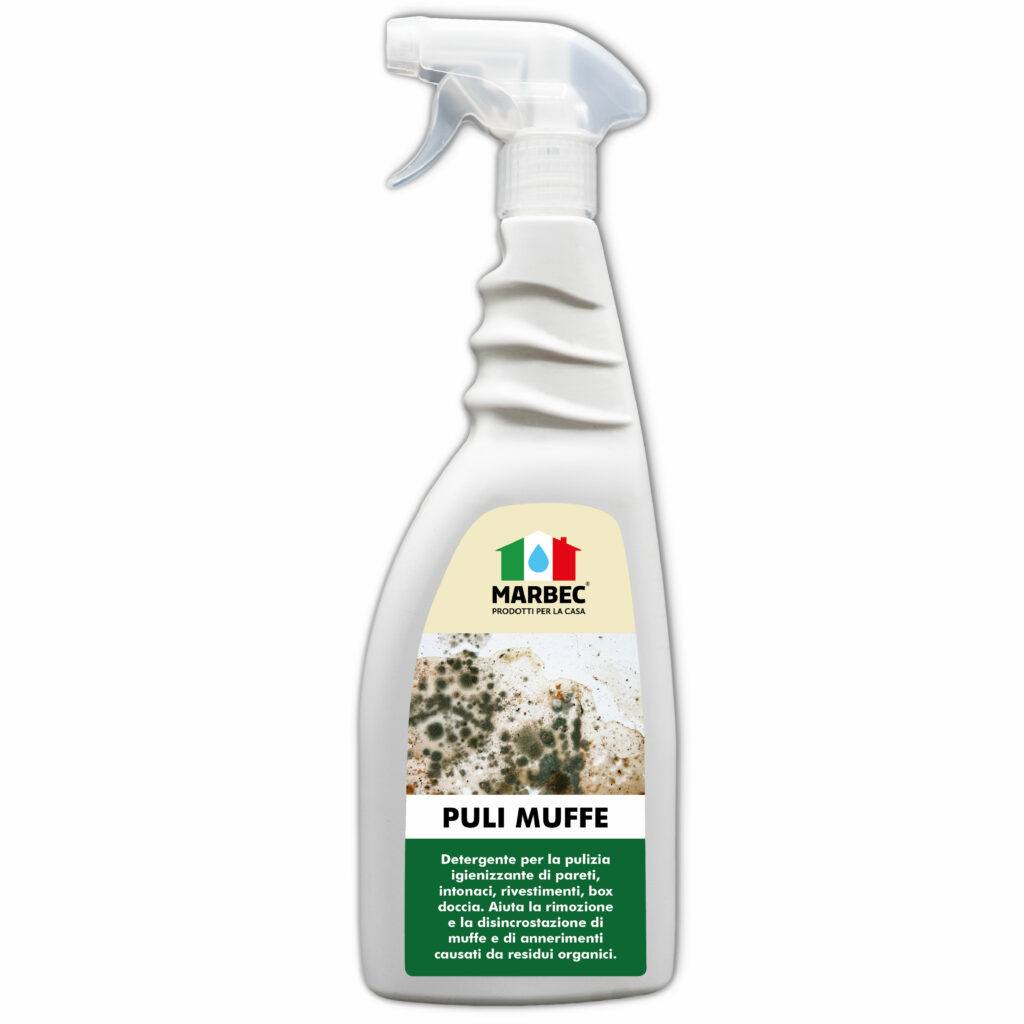
PULI MUFFE
Detergent for the cleaning of walls, plasters, coatings, shower enclosures. Helps the removal and descaling of mold and blackening caused by organic residues.
Once the surface is cleaned, the other highly recommended product is IDROWIP, a powerful water repellent for absorbent stone materials and plasters, which protects the material from moisture and is particularly suitable for the most critical areas such as bathroom walls, showers, kitchens and coverings where moisture promotes the development of mold. IDROWIP acts effectively on the absorbent material, preventing the formation of saline efflorescence, scabs, patinas and algae, as well as the return of the mold itself. IDROWIP is a water-based and odorless product, safe to use even in closed environments, without risks to the health of users or the surrounding environment; moreover, it significantly reduces the water absorption in the material, thus helping to improve the thermal insulation of the treated surfaces.
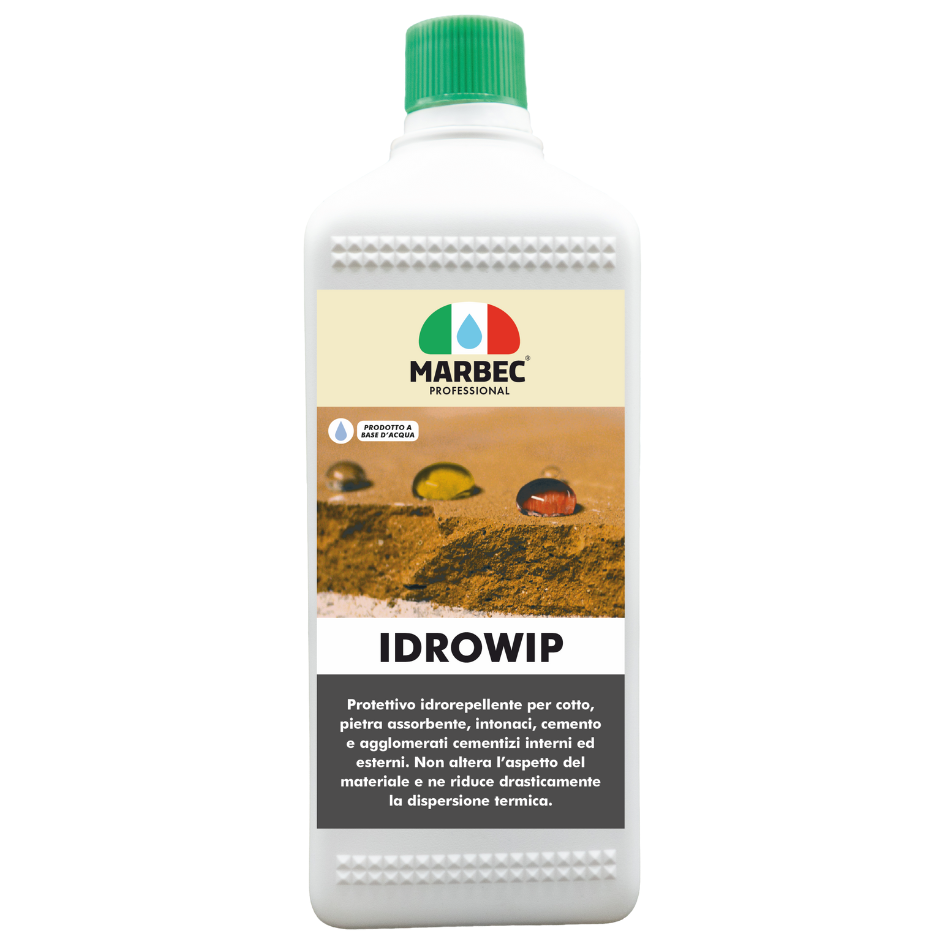
IDROWIP
Protective water repellent for cotto, absorbent stone, plasters, cement and internal and external terrazzo. It significantly increases the thermal insulation of the walls, reducing thermal dispersion, while leaving the appearance of the material unchanged.
If the existing mold is caused by water infiltration, opt for ACQUABLOCK, a water-repellent anti-infiltration consolidator, for stone materials in general and plasters. This sealant will help prevent further infiltration, protecting the material from moisture.
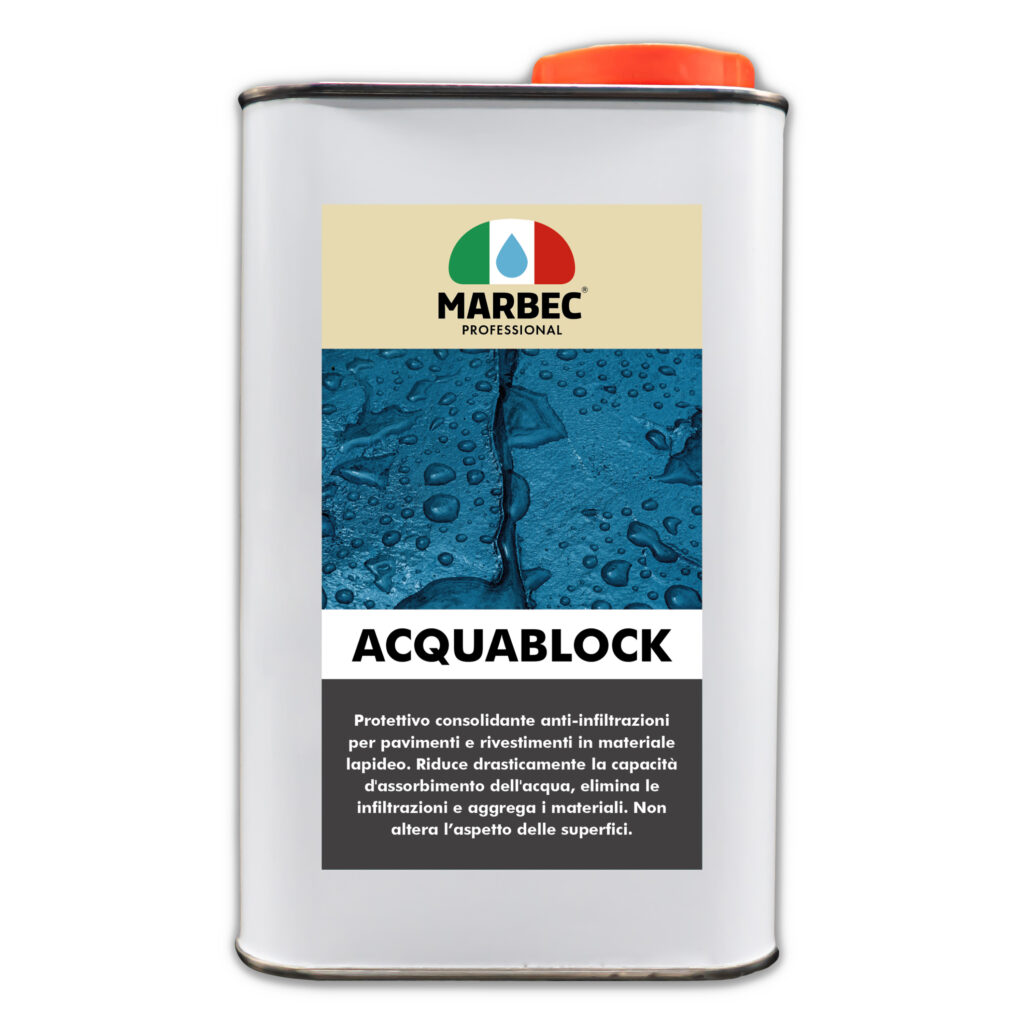
ACQUABLOCK
Anti infiltration protective for floors and walls in stone material. It drastically reduces water absorption capacity, eliminates infiltration and aggregates materials. It does not alter the appearance of surfaces.
Mold on the walls can be annoying and harmful, but by following these steps and using the right anti-mold products, you can effectively eliminate it and prevent its reappearance.
Let’s see step by step how to use the products:
Step 1: Cleaning with PULI MUFFE, a product specifically designed to remove mold from surfaces, to remove dirt and surface debris.

Step 2: Apply IDROWIP or ACQUABLOCK
Now that you’ve eliminated the mold, it’s vital to prevent its reappearance. The choice between IDROWIP and ACQUABLOCK depends on the underlying cause of the mold.

Both PULI MUFFE and IDROWIP and ACQUABLOCK are easy to use and offer long-lasting results when used correctly. Always remember to carefully follow the instructions on the package to ensure proper application and maximize the effectiveness of the product.
With the help of these effective chemicals, you will be able to understand how to clean mold from the walls and restore a healthy and clean environment. However, if the situation is serious or persistent, consult a construction professional to identify and fix the root problem. With proper care, you can keep your walls clean and healthy for years to come.
Don’t let mold ruin your house or workplace, go to action today and enjoy the positive effects of a complete and lasting cleaning.
-

PULIMUFFE®
Sanitizing whitening cleaner for the removal of mould and organic black stains from bathroom surfaces, shower enclosures, tiles and plaster.
+ Varianti4.26€
-
ACQUABLOCK®
Consolidating, water-repellent anti-infiltration protector for stone materials such as terracotta, natural stone, marble, cement and porcelain stoneware. It penetrates deeply to form an invisible barrier that reduces water absorption, blocks infiltration caused by micro-cracks, and strengthens surfaces without altering their appearance, helping to avoid demolition and costly renovation work.
+ Varianti36.58€


Cleaning and restoring indoor varnished wood floors makes it possible to revive matte or glossy varnished parquet flooring that has lost its shine, even colour and original appearance due to everyday wear. When the protective finish is still intact and the floor does not require complete sanding, you can restore parquet without sanding by following a dedicated treatment that removes surface greying, revives the wood and restores the protective finish. This restoration process is suitable for both glossy and matte varnished parquet floors by selecting the treatment that matches the original finish. For this reason, Marbec developed the KIT RESTAURA LEGNO VERNICIATO LUCIDO and the KIT RESTAURA LEGNO VERNICIATO OPACO, two complete systems designed to clean, restore and protect varnished wood floors without sanding or refinishing whenever the floor is still suitable for surface restoration.

An oak parquet floor with an oil-wax impregnation can lose colour, protection, and visual uniformity over time. This often happens because of incorrect maintenance or unsuitable products. However, if the wood is still structurally sound, replacement is not always necessary. With a professional restoration process, the surface can regain balance, beauty, and long-term protection.


